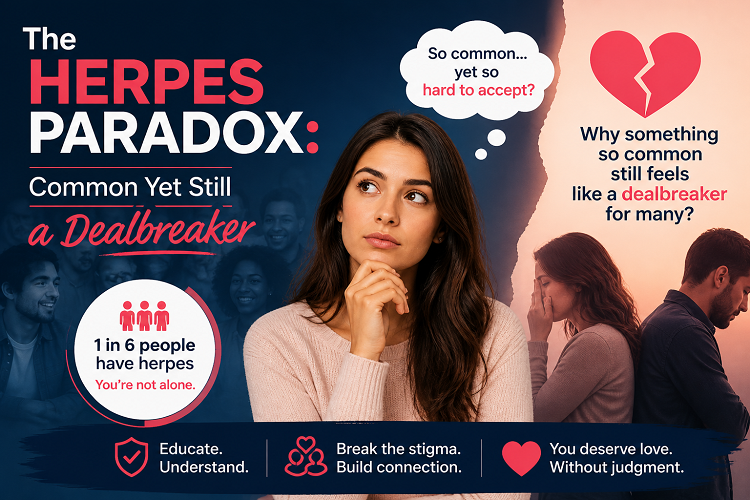
Dating today feels more open than ever, yet some topics still carry an invisible weight that can change everything in a relationship. One of the most misunderstood is herpes. Despite being one of the most common viral infections globally, it continues to shape decisions, emotions, and long-term relationships in ways that are rarely discussed honestly. This is what many people refer to as The Herpes Paradox—a condition that is medically common, often manageable, and usually not life-threatening, yet still considered a dealbreaker in dating conversations.
To understand this paradox, we need to look beyond medical facts and into human behavior, stigma, communication gaps, and emotional reactions that surround it.
Understanding the Herpes Paradox
From a medical standpoint, herpes simplex virus (HSV-1 and HSV-2) affects a large portion of the global population. Many people carry it without symptoms or even awareness. Yet in dating culture, it is often treated as a major red flag.
This disconnect is where the paradox lives:
People live normal, healthy lives with herpes, yet fear rejection when it comes to intimacy and relationships.
The result is a dating landscape shaped less by facts and more by fear, assumptions, and stigma.
Herpes Still Feels Like a Dealbreaker
Even though awareness has improved, the emotional response to herpes in dating remains intense for many people. Several factors contribute to this:
- Lack of education – Many people still believe outdated or exaggerated information.
- Fear of judgment – Disclosure often feels like risking emotional rejection.
- Stigma history – Cultural messaging has long associated STIs with shame.
- Miscommunication online dating – Fast-paced dating apps don’t leave room for deeper conversations.
This is why the question “is herpes a dealbreaker in dating” still comes up so frequently in search and real-life discussions.
The Emotional Side of Disclosure
One of the most difficult parts of dating with HSV is disclosure. People often struggle with timing, wording, and anticipating reactions. This is where Herpes Disclosure In Relationships becomes a central emotional challenge.
For many, the moment of disclosure is not just about health—it’s about vulnerability, trust, and self-worth.
Some common internal fears include:
- “Will they still like me after this?”
- “Am I being unfair by telling them?”
- “What if they leave immediately?”
These thoughts are not rare. They are part of the lived experience of living with herpes dating challenges.
HSV Stigma in Dating: Where It Comes From
The stigma surrounding herpes is not purely medical—it is social and psychological.
HSV Stigma In Dating is influenced by:
- Media portrayals that exaggerate severity
- Lack of open sexual health education
- Cultural discomfort discussing STIs
- Misinterpretation of risk and transmission
In reality, herpes is medically manageable, but stigma often makes it emotionally heavier than the condition itself.
Relationship Impact: More Than a Diagnosis
Herpes doesn’t just affect health—it can affect trust, communication, and emotional intimacy.
Common herpes simplex virus relationship issues include:
- Delayed or avoided conversations about sexual health
- Anxiety around intimacy
- Fear of transmitting the virus
- Misunderstandings between partners
However, many couples also report stronger communication after disclosure. When handled with honesty and respect, it can deepen emotional connection rather than weaken it.
Dating Someone With Herpes: What Really Matters
Being with someone who has herpes does not define the quality of the relationship. What matters more is:
- Honesty and timing of disclosure
- Mutual respect and understanding
- Awareness of safe practices
- Emotional maturity on both sides
Many people who initially worry about dating someone with herpes later realize it is far less complicated than they imagined.
Mental Health and the Hidden Burden
One of the most overlooked aspects is mental health.
The Herpes Stigma Mental Health Impact can include:
- Anxiety before disclosure conversations
- Fear of rejection or abandonment
- Shame or self-isolation
- Reduced confidence in dating
These emotional struggles often have a bigger effect than the physical symptoms themselves.
Supportive communities and open conversations can significantly reduce this burden over time.
Community Insights: What People Are Saying
Across online support groups and dating communities, a few patterns consistently appear:
Many individuals say that initial fear is far worse than actual dating outcomes. Others highlight that honesty early in a relationship often leads to stronger trust.
A common sentiment shared in community discussions is:
“The right person won’t walk away from you over honesty—they’ll appreciate it.”
Another frequent insight:
“The stigma is louder than reality. Most people just want clarity and respect.”
These shared experiences help normalize conversations that were once considered taboo.
Testimonials from Real Experiences (Anonymous)
“I thought I would never date again after my diagnosis. But when I finally opened up, I realized rejection wasn’t as common as I feared. I found someone who valued honesty more than perfection.”
“Disclosing herpes felt like the hardest thing I’ve ever done. But it also showed me who was emotionally mature and who wasn’t.”
“I used to think herpes would define my dating life. Now I know it only filters out the wrong people faster.”
“The anxiety before telling someone is worse than their actual reaction most of the time.”
Breaking the Dealbreaker Myth
So, is herpes truly a dealbreaker in dating?
The answer depends less on the virus and more on perception.
For some, it may still be a dealbreaker due to personal boundaries or lack of understanding. For others, it is simply another health consideration—no different from many manageable conditions in relationships.
The key shift happening today is awareness. As conversations become more open, the weight of stigma slowly decreases.
FAQs
1. Is herpes really that common?
Yes, it is one of the most common viral infections worldwide, and many people have it without knowing.
2. Can you date normally with herpes?
Yes. Many people with HSV have healthy, long-term relationships.
3. When should you disclose herpes in dating?
Usually before becoming sexually intimate, once trust and connection are established.
4. Does herpes always cause symptoms?
Not always. Many people experience mild or no symptoms at all.
5. Can someone reject you for having herpes?
Yes, some may choose not to continue, but many others are understanding when informed properly.
6. Is herpes a dealbreaker in modern dating?
For some yes, for many others no—it depends on awareness, communication, and personal values.
Conclusion: Moving Beyond Stigma
The herpes paradox highlights a deeper truth about modern dating: emotional perception often outweighs medical reality. While Herpes Dating Stigma still exists, it is slowly being challenged by open conversations, education, and real-life experiences.
Understanding, honesty, and empathy are reshaping how people view herpes dating challenges and relationships overall.
At its core, dating is not about perfection—it is about connection, trust, and acceptance. And those values matter far more than any diagnosis.